

freshpet // responsive web // custom quiz redesign
Role:UX Designer
>> I simplified onboarding to reduce drop-off and increase subscription conversion >>
Overview
The Challenge
The Constraints
Research + Insights
The Impact
The Takeaways
What I’d Do Next
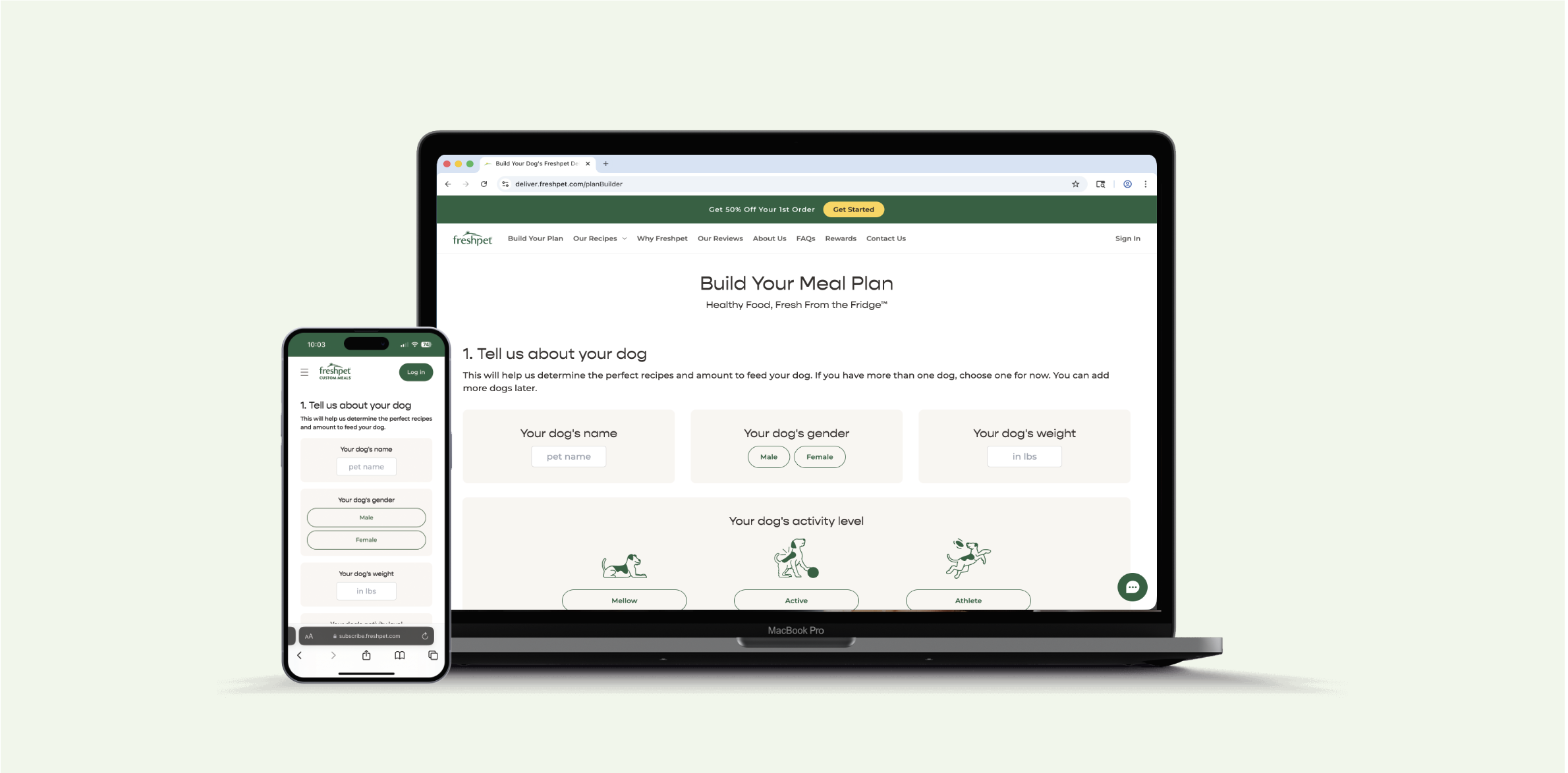
The Solution
Timeline:Oct 2023 - Mar 2024
Tools:UX Research
Competitor Benchmarking Wireframing
Usability Testing
Shopify Customization
Freshpet Custom Meals – a subscription service that delivers tailored fresh meals for dogs – needed to improve its onboarding experience to reduce drop-off and increase subscription completions. This plays a critical role in guiding new users to the right products while collecting pet preference data used for personalization.
I led UX strategy and design for a redesigned onboarding flow focused on improving first-purchase conversion without increasing friction.
The existing multi-step Build Your Plan quiz was overwhelming users and generating high abandonment rates early in the funnel. New users were abandoning the onboarding flow before reaching product recommendations or checkout. Analytics showed about a ~45% drop off rate.
Key issues identified:
The experience relied on long, multi-step form-based inputs
Questions felt effortful and transactional, users unclear on effort + expectations
Incomplete data limited personalization and confidence
The challenge was to reduce friction while increasing perceived value, allowing users to feel guided, not interrogated.
Service available only in select NYC zip codes (beta)
Mobile-first experience required
Shopify backend limitation
My competitor analysis of 12 market quiz flows and user testing notes revealed that:
• Most successful personalization flows are short, transparent, and visually scannable.
• Early expectations of required information help users feel in control, not led blindly.
• Users generally abandon flows perceived as too long or unclear.
Rather than optimizing for speed alone, the onboarding needed to feel like a guided conversation that built confidence and trust.
• Restructured Sequencing: Onboarding was redesigned to focus on sections within the quiz. The original design had one question per screen and was perceived too long, even with the progress bar at the top.
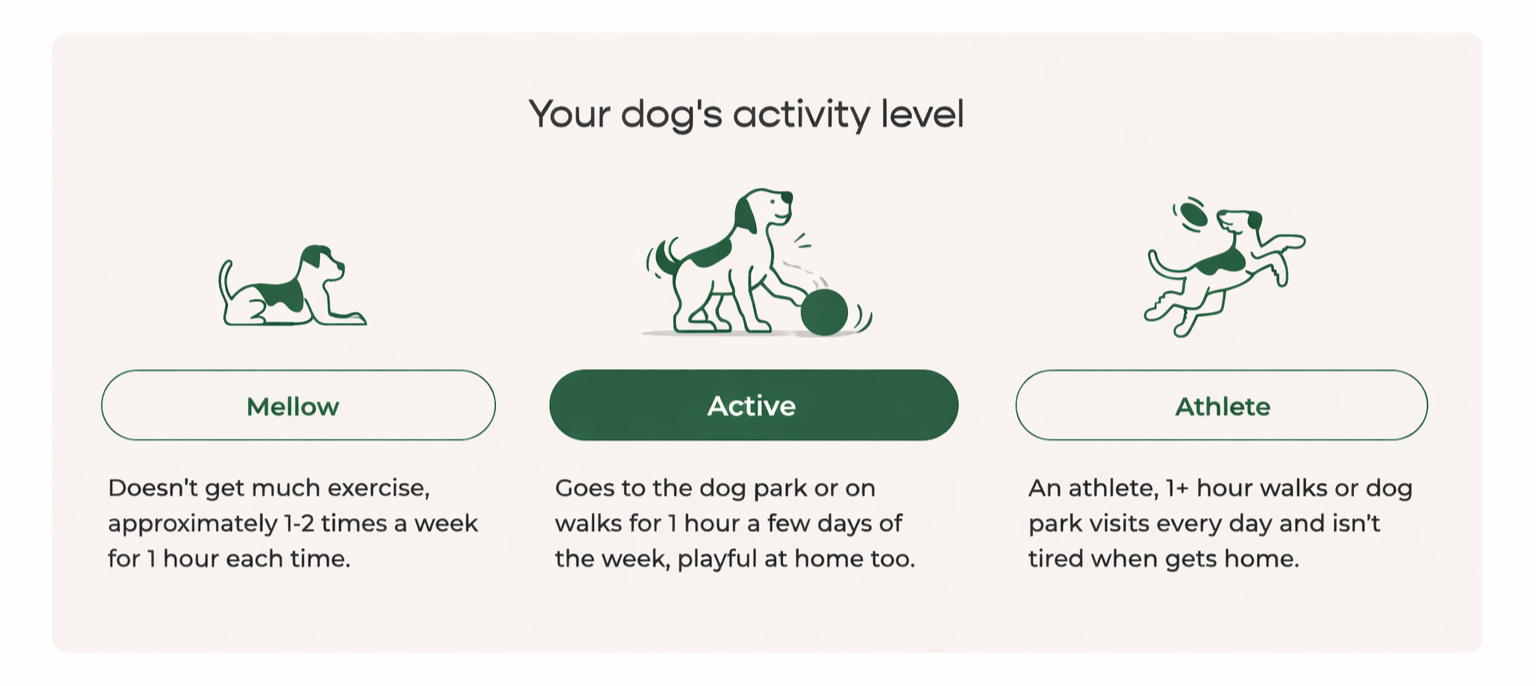
• Progressive Disclosure: Any questions, information and options were revealed gradually instead of all at once.
• Recommendation Preview: Before checkout, users were shown how their answers directly shaped their product recommendations.
This reframed onboarding from a barrier into a value exchange.
>> emotional visuals balanced functional data collection with Freshpet’s warm brand personality (web) >>
>> the recommendation preview validated the time spent onboarding and increased trust in the system >>
>> redesigning the format of the quiz reduced the perceived effort, maintained momentum, and made progress feel achievable.
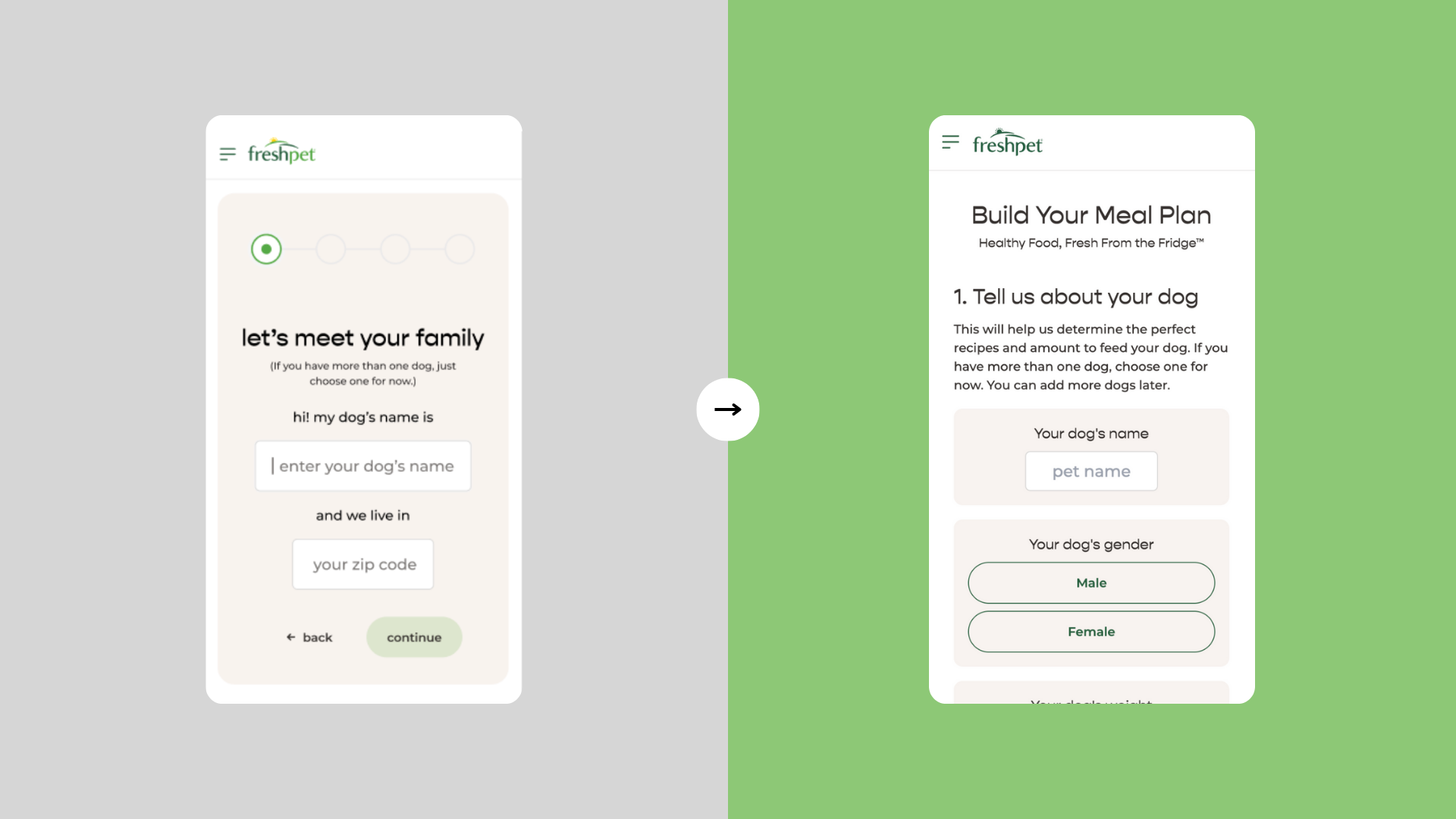
>> progressive disclosure helped users stay focused and reduced the intimidation often associated with long forms >>
While long-term metrics were still being monitored, early signals showed increased user confidence and smoother progression to checkout.
User testing indicated the redesigned quiz was perceived as easier and more transparent.
Reduced friction directly addressed the subscription abandonment issue, creating a stronger path to conversion.
Simplification aligned the UX with business goals of increasing completed quizzes and potential revenue growth.
This project reinforced the importance of designing onboarding as a value exchange, not a gate.
Simplification trumps complexity when personalization is core conversion driver.
Early expectation setting prevents unnecessary friction.
Benchmarking competitors early informs differentiation opportunities.
If iterating further, I would:
Run A/B tests on layout variations (such as field prioritization, any microcopy refinements); continue optimizing based on real usage data.
Explore progressive personalization post-conversion.
Consider localized content or incentives tailored by zip code availability.